
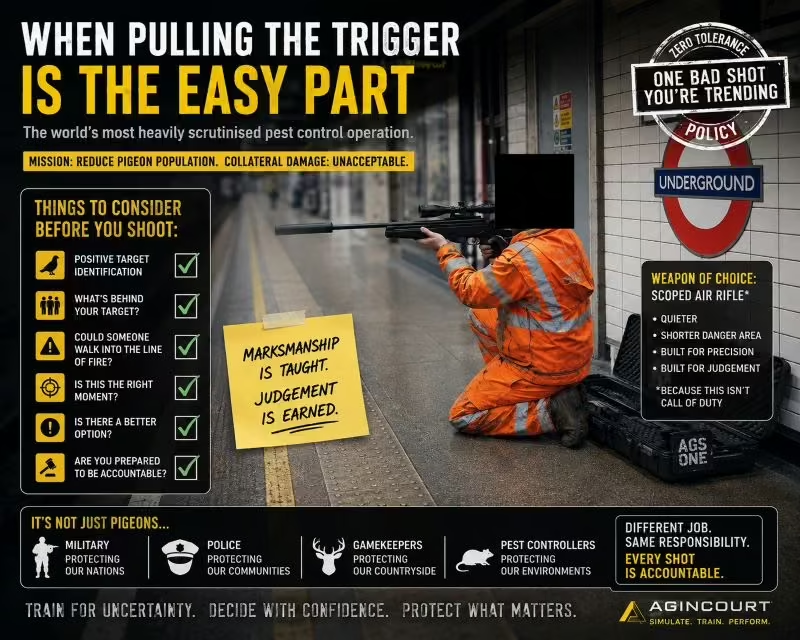
The photographs of a contractor kneeling on a London Underground platform with a scoped rifle spread quickly across social media. Predictably, the jokes followed. “TfL sniper” became the headline.
The weapon isn’t the interesting part.
The interesting part is that someone has authorised a person to discharge a rifle in one of the busiest public transport networks in the world.
That decision doesn’t happen lightly.
Before the first shot is ever considered, a long list of questions has already been answered.
Is this the right method?
Is there a safer alternative?
What is behind the target?
Could a member of the public enter the danger area?
What happens if the target moves?
What happens if the shot misses?
Who is accountable if something goes wrong?
Those questions matter far more than the mechanics of pulling a trigger.
Professional pest controllers, police firearms officers and military personnel may operate in very different environments, but they all rely on the same fundamental principles. Positive target identification. Safe backstops. Risk assessment. Muzzle discipline. Accountability.
The public tends to focus on marksmanship. Professionals focus on judgement.
Hitting a target is a technical skill. Modern equipment makes that easier than many people realise.
Knowing when not to shoot is much harder.
That is why modern firearms training has changed so dramatically over the last decade.
Traditional range training teaches weapon handling and accuracy. Those skills remain essential, but they are only part of the picture.
Real incidents rarely involve a static target, perfect lighting and unlimited time.
Instead, they involve uncertainty.
People move unexpectedly.
Information changes.
Distractions appear from nowhere.
A perfectly good shot one second can become completely unacceptable the next.
Training has to reflect that reality.
Modern simulation systems allow instructors to recreate complex situations repeatedly without placing anyone at risk. Trainees can practise judgement as much as marksmanship, facing realistic scenarios where the safest decision may be to lower the weapon, wait for a better opportunity or not fire at all.
Every decision can then be reviewed.
Not simply asking:
“Did they hit the target?”
But asking something much more valuable:
“Why did they decide to take the shot?”
That shift is changing military and police training across the world.
Performance is no longer measured solely by accuracy. It is measured by consistency, judgement, situational awareness and decision-making under pressure.
The photographs from the London Underground weren’t really about pest control.
They were a reminder that every authorised shot represents far more than someone aiming a rifle.
It represents planning.
Training.
Trust.
And the confidence that the person behind the trigger has already made dozens of correct decisions before deciding to make one final, irreversible one.
Because pulling the trigger is often the easiest part.