Unmanned swarm technology is becoming more important in modern warfare. Jiutian, a UAV developed by China’s AVIC, is a major step forward in this area. It is built to disrupt and overwhelm enemy defenses by deploying large numbers of drones and creating uncertainty. Jiutian is not focused on stealth or long endurance. Its main purpose is to launch swarms and add complexity to contested airspace.
Jiutian’s first flight on 11 December 2025 signaled more than a technological milestone; it underscored its purpose-built role as an airborne swarm-launcher, shifting focus from its physical form to its strategic function.
A Platform Designed Around Payload, Not Elegance
Jiutian looks basic compared to modern UAVs that use stealth shaping. It has a twin-boom layout, straight wing, and an engine mounted on top. The design is focused on carrying capacity and payload, not on being hard to detect. This is a deliberate choice, trading stealth for the ability to carry and launch more drones.
Powered by a single turbofan, likely a WS-9 Qinling derivative, Jiutian can fly high at jet speeds. Its landing gear retracts into wing sponsons, suggesting operations from dispersed or rough airstrips instead of main bases. That detail signals assumed attrition and mobility over permanence.
Jiutian has a maximum takeoff weight of about 16 tonnes and can carry around 6 tonnes of payload. It is larger than China’s armed MALE drones but smaller than UAVs based on bombers. For comparison, the Global Hawk and MQ-25 both weigh about 15 to 15.5 tonnes. Jiutian is similar in size to these large drones, but what matters most is how it uses its weight for payload.
The Heart of Jiutian, An Internal Swarm Bay
Everything about Jiutian centres on its internal bay. Chinese sources call this modular compartment an “isomerism hive,” reportedly able to deploy over one hundred small drones or loitering munitions in flight.
Consequently, Jiutian is not optimised to recover those systems—it is designed entirely to release them.
Rapid reconfiguration, reportedly under two hours, underlines the point. Jiutian cycles between missions —swarm deployment, electronic warfare, ISR, or relay—acting as a launcher and coordinator, not just an aircraft.
This design shows how China values what the aircraft can do before it is targeted, not how long it survives.
More Than a Mothership
Jiutian can also carry weapons under its wings, with eight hardpoints for guided bombs and missiles. Reports say it can carry precision-guided munitions, anti-ship weapons, and short-range air-to-air missiles for self-defense. Jiutian could appeal to countries with weak air defenses, as swarm tactics might help them offset traditional shortcomings. Its export potential raises questions about the spread of this technology.
An electro-optical and infrared turret provides Jiutian with organic targeting and reconnaissance capabilities, enabling it to operate independently. In practice, it can be a standoff strike platform, an ISR node, or a swarm launcher, as tasked.
Operationally, this flexibility matters. By allowing commanders to tailor missions without redesigning the platform, Jiutian remains adaptable rather than exquisite.
How Jiutian Is Intended to Be Used
Chinese doctrinal writing and concept imagery are unusually explicit about Jiutian’s role. The aircraft is shown operating at standoff range, releasing large numbers of unmanned systems ahead of manned aircraft, missiles, or follow-on strikes.
Jiutian need not penetrate deeply into defended airspace. Its role is to push complexity forward.
By launching swarms of low-cost drones, decoys, or loitering munitions, Jiutian can force defenders to respond to multiple ambiguous threats at once. Sensors saturate. Command systems strain. Interceptors are expended on targets that may not matter.
Jet propulsion gives Jiutian a clear advantage over propeller-driven UAVs in this role. Faster transit reduces exposure time and enables launches from farther distances. It does not make the aircraft survivable in a peer fight, but it increases the chances that the payload is released before interception.
A High-Value, Fragile Asset
Jiutian is not survivable in contested airspace. It has a large radar signature, subsonic speed, and no stealth features. Flying at fifteen kilometers puts it within range of modern air defenses, and enemy forces can engage it within minutes. This shows the risk involved in using Jiutian for these missions.
This vulnerability is intentional. The design accepts the risk.
Jiutian is used when air defenses are expected to be weakened or distracted. It depends on escorts, electronic support, or sheer numbers. The main idea is that losing the mothership is acceptable if the swarm achieves its goal.
This is a fundamentally different mindset: Western approaches emphasize keeping platforms operational, while Jiutian, in contrast, is designed as a system-level consumable enabler. What does treating a 16-tonne aircraft as expendable signal about the PLA’s approach to risk calculus? This shift challenges the traditional Western focus on platform preservation and cost-efficiency. The comparison highlights not just a technological divergence, but a broader cultural and strategic one that may reshape how military effectiveness is evaluated.
Why Jiutian Matters Strategically
Strategically, Jiutian aligns closely with China’s broader military direction. It reflects a preference for cost-imposing systems, distributed effects, and platforms that generate operational dilemmas rather than decisive strikes on their own.
Jiutian is part of China’s military-civil fusion policy. It is officially a multi-role UAV, which helps make airborne swarms more common and hides its main purpose. If exported, swarm tactics could spread to countries with weak air defenses.
There are still questions about autonomy, command resilience, and coordination. Launching many drones is one thing, but making them effective in difficult environments is another. China is making progress, but there is still a gap between the idea and reliable use.
The Training Implication That Often Gets Missed
Jiutian shows that the main problem is not just technology. Swarm warfare puts a lot of pressure on human decision-making.
Traditional air defense training is based on clear tracks, manageable timelines, and clear threat levels. Jiutian and similar systems break these assumptions by creating more targets, more uncertainty, and more time pressure at once.
This is not a sensor problem alone. It is a cognitive one.
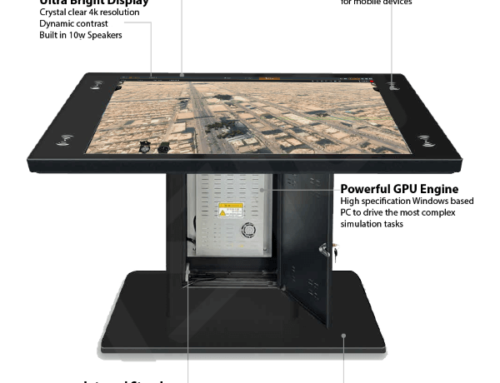
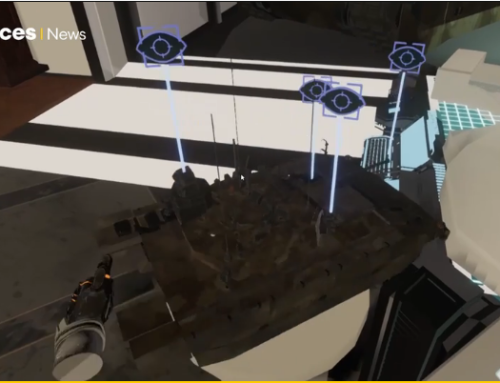
Training for swarm warfare needs systems that can simulate large numbers, uncertainty, and overload without using up real equipment. Synthetic and immersive training is needed to prepare for these challenges.
Closing Assessment
Jiutian is not a stealth bomber or a war-winner on its own. It is meant to increase pressure on defenses and command systems. In less defended areas, it acts as a force multiplier. Against strong opponents, it is fragile and meant to be expendable. The main issue is whether the chaos it creates is enough to make a difference before it is lost. The outcome will depend on whether swarm designers or air defenders adapt faster.